
HYDRO‑02
The solar‑electric
exoskeleton.
A modular platform designed to clamp around an existing hull — and turn it into a low-impact floating laboratory.
Concept
The exoskeleton is a modular platform that installs around an existing hull. Rather than designing a wholly new boat, we develop a retrofit technical overlay — adaptable to different hull architectures, reproducible, and fully dismountable.
This approach directly embodies Biutopic's values: regenerate rather than replace, optimise what already exists rather than extract new resources. L'Hydronaute is its first demonstrator.
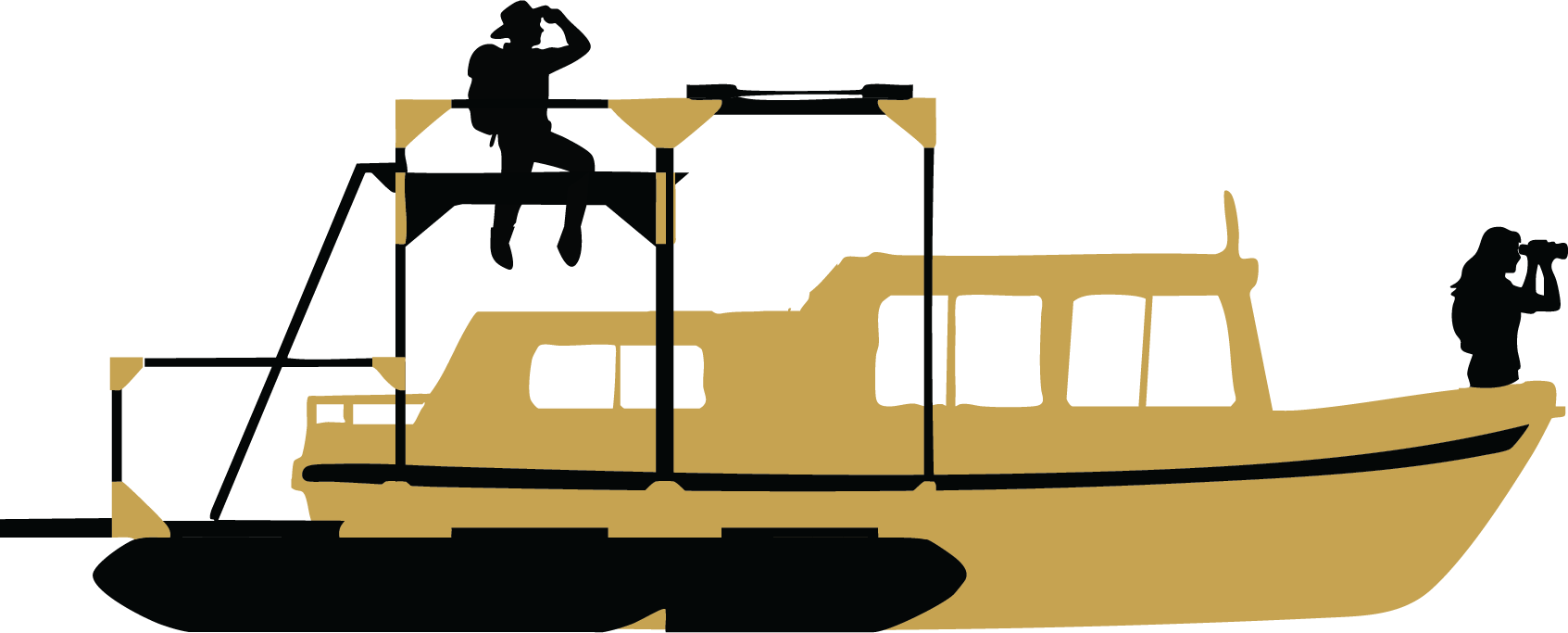
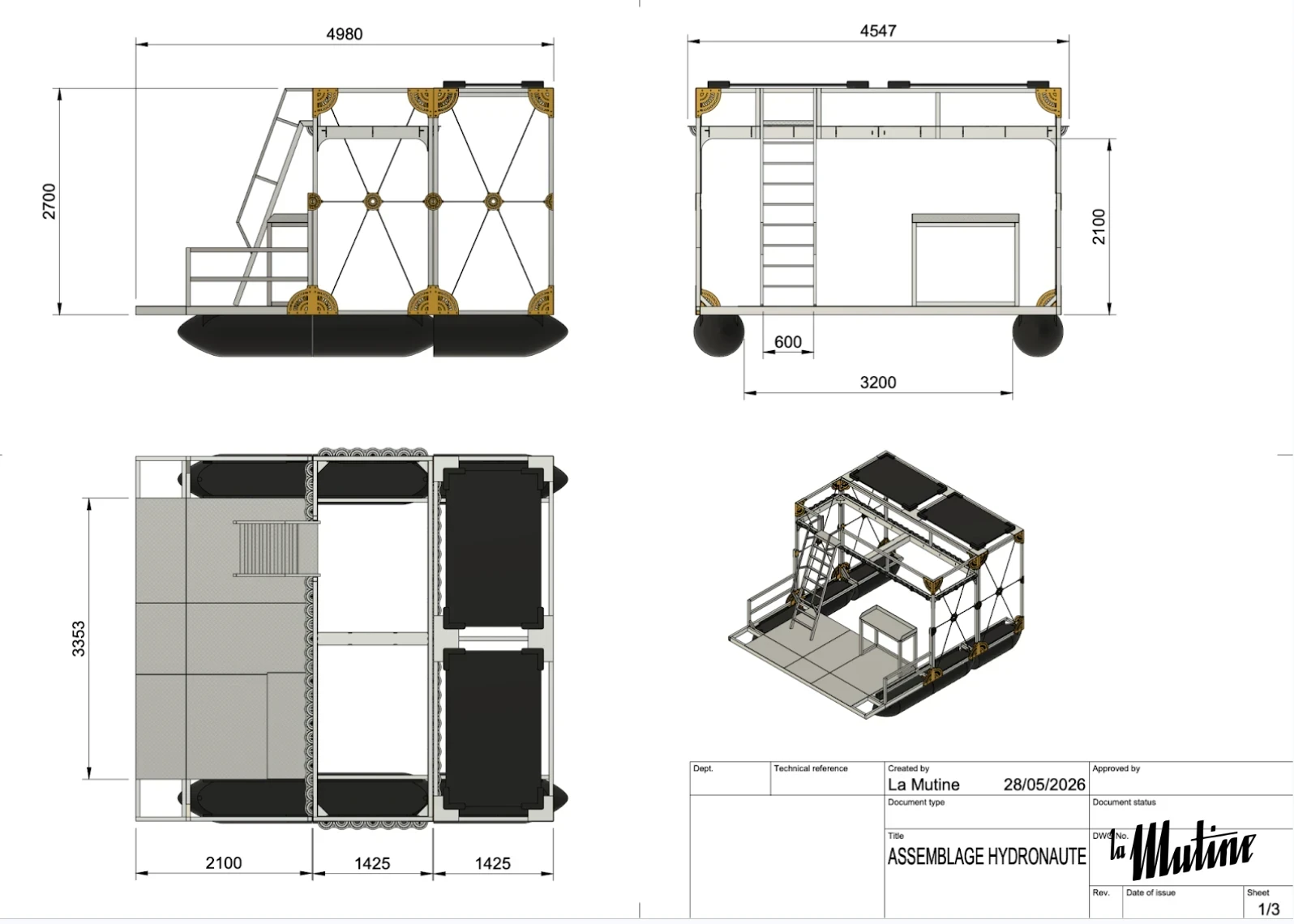
Intended architecture · Envisaged functions
The intended architecture can integrate all technical systems into a unified structure, designed to be assembled and disassembled without any permanent modification to the original hull. The prototype is in development — each function is validated in stages.
- 01 Solar panels
Renewable energy generation while underway and at mooring. Surface area optimised for sun exposure and electrical load.
- 02 Batteries
Energy storage to ensure propulsion range and power supply for scientific instruments throughout the voyage.
- 03 Electric drivetrain
Envisaged integration of electric propulsion and navigation- assistance functions, subject to technical validation.
- 04 Onboard electronics
Perception and assistance modules based on artificial intelligence may be tested as they are integrated and validated.
- 05 Lateral stability floats
Provide stability during sampling and scientific analysis manoeuvres, or when carrying heavy instrument loads.
- 06 Scientific instruments
Modular space for research equipment — sensors, samplers, analysers — swappable to match each study protocol.
Microplastic filtration
A hydrocyclone filtration system.
Among the integrated scientific instruments, a hydrocyclone filtration system samples, filters, separates and analyses the microplastics present in the water.
The hydrocyclone uses centrifugal force to separate particles by density — no mechanical filter to replace, no chemicals. Collected samples feed directly into Biutopic's open database on plastic pollution in inland waterways.
Approach
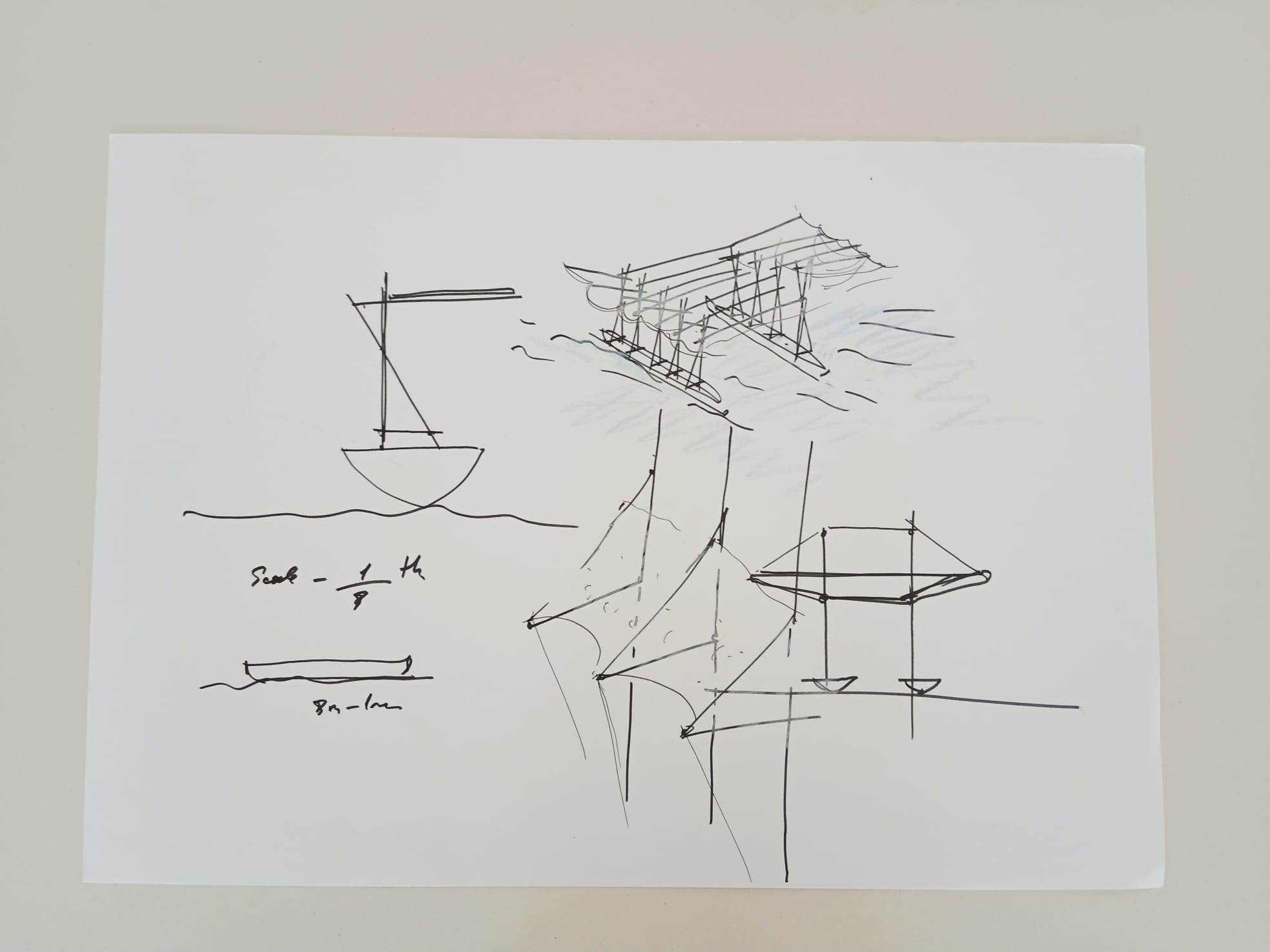
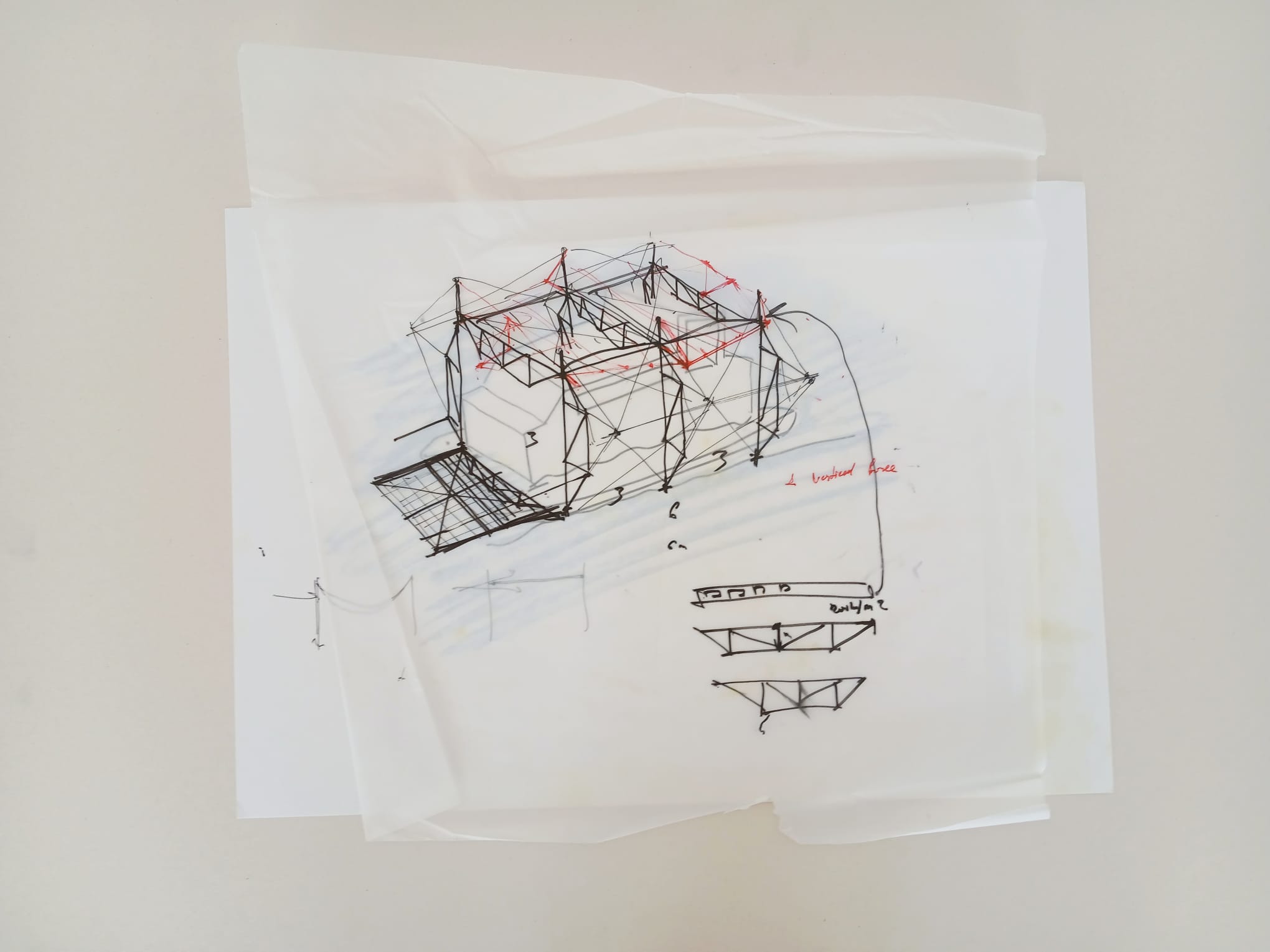
Design sketchbooks
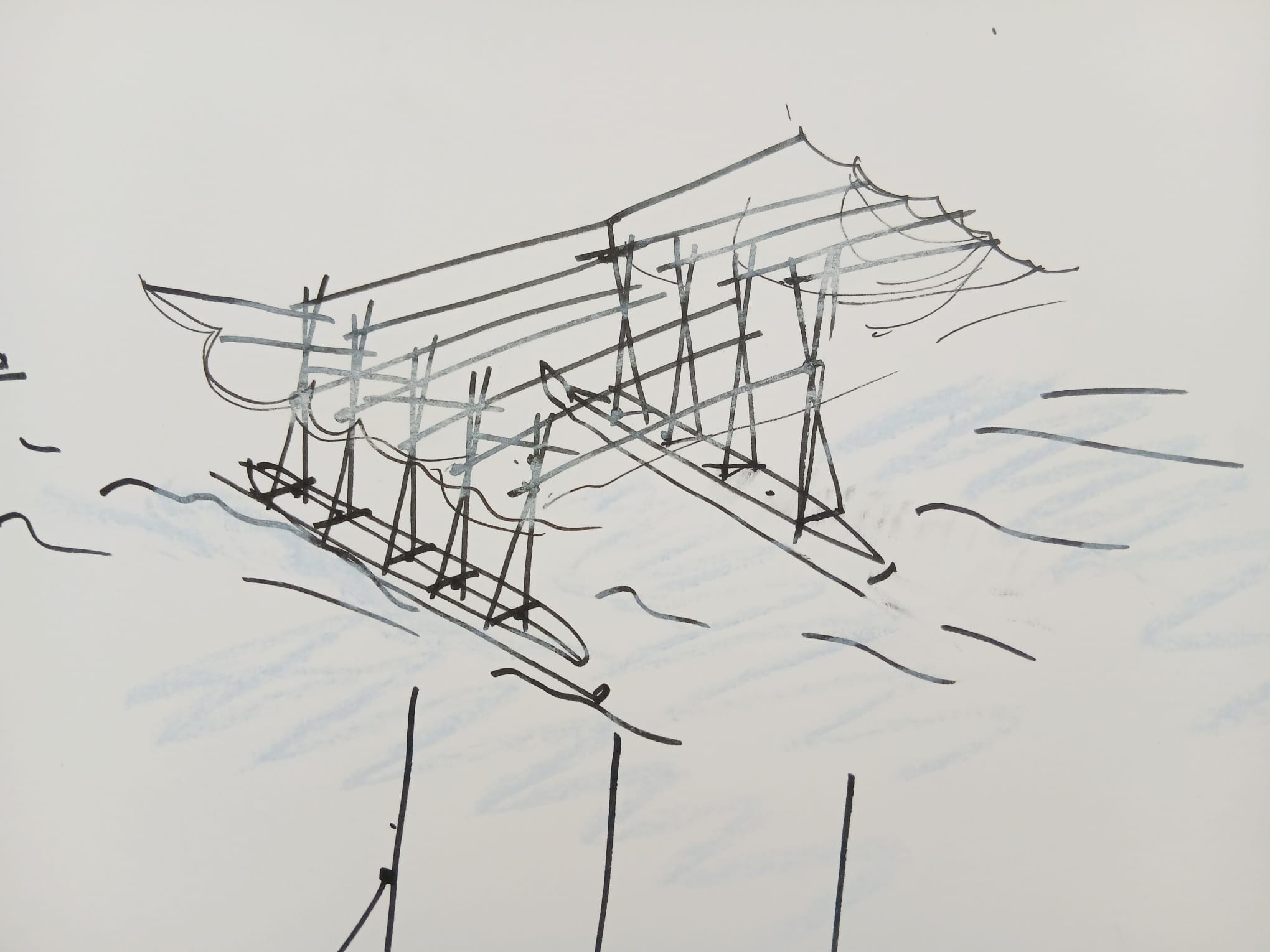
The exoskeleton was born on tracing paper — hundreds of sketches, overlays, and reconsiderations. These pages are the work of Arpi Mangasaryan, architect and researcher at the heart of the project.
Timeline
From spec to launch.
Prototype phase — delivery and fit-out in progress (July 2026).
-
01 · Early April → mid-April Done
- Project kickoff
- Drafting & sign-off of the technical specification
-
02 · Mid-April → mid-May Done
- Design · 3D modelling
- Construction drawings
- Hardware sourcing
-
03 · Mid-May → end of May Done
- Simulation · engineering-office submission
- Adjustments · engineering-office sign-off
- Fabrication drawings
- Raw-material order
-
04 · Early June → end of June Done
- Workshop fabrication
- Flotation tests
- Adjustments
-
05 · Early July → mid-July In progress
- Delivery
- Boat fit-out
The exoskeleton is not a technological gadget. It is a demonstration that technology can serve the living world — lightweight, sober, and reproducible.